

Ask ten marketers how they build authority online and you will get ten different answers. Ask them which results last longest, and most will point to the same thing: being featured by publications their audience already trusts.
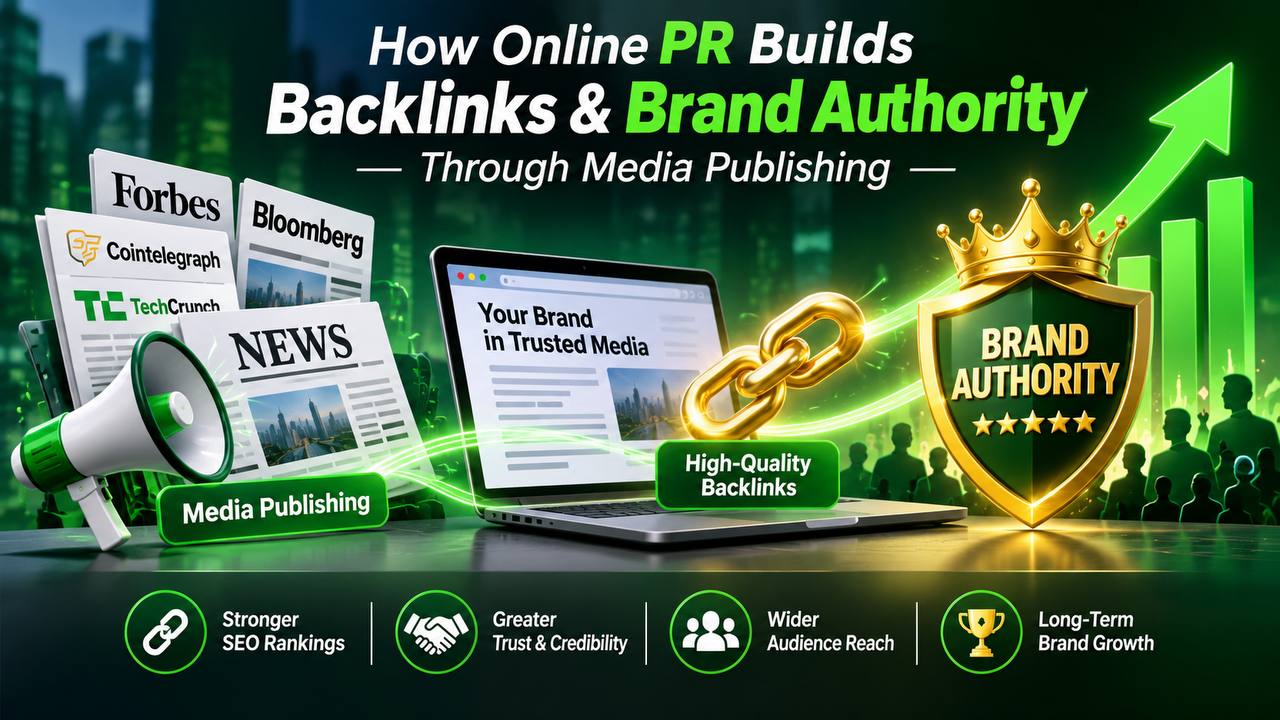
That is the heart of online PR. It places your brand, your people and your story in front of readers on established media outlets, and each placement can carry a link back to you. Done consistently, it does two jobs at once. It earns digital PR backlinks, and it builds the sort of brand authority that no amount of on-site tweaking can replicate.
Here is how it works and how to get the most from it.
Why media publishing and backlinks belong together
A backlink is a vote of confidence from one website to another. Search engines have relied on that idea for years, and links from respected, relevant sites still carry real weight.
The catch is that not all links are equal. A mention in a well-known industry publication tells search engines something very different from a link on a site nobody reads. Relevance, audience and editorial standards all matter.
Media publishing solves this neatly. Instead of collecting links wherever you can find them, you choose outlets that suit your sector, tell a story worth reading and let the coverage do the work. The link is simply part of a piece of content that stands on its own merits.
What brand authority really means
Brand authority is a slightly fuzzy phrase, so let’s keep it practical. For a search engine, it is the combination of signals suggesting your brand knows its subject and can be trusted. For a reader, it is the feeling that you are one of the names people in your industry actually take seriously.
Google’s quality guidelines refer to experience, expertise, authoritativeness and trustworthiness, usually shortened to E-E-A-T. Those qualities are judged largely by what others say about you, and where they say it.
“Coverage on credible media outlets ticks several of those boxes at once. It shows other publications consider you worth featuring. It puts your name next to respected brands. And it gives potential customers, investors and partners a reason to trust you before they ever visit your website.”
— WebPR Strategy Editorial
Five ways to use media publishing to earn backlinks
1. Publish news that deserves attention
Product launches, funding rounds, partnerships, new research and leadership appointments are all legitimate news. A well-written announcement, distributed to the right outlets, can generate coverage, a backlink and brand mentions within a day or two.
Choose the outlets before you write. A release aimed at a finance publication reads differently from one aimed at a technology blog, and the best results come from tailoring the angle to the audience.
2. Use press release distribution wisely
Press release distribution is a quick way to get your announcement in front of a wide range of outlets. It works best when the release is genuinely newsworthy, concise and easy for an editor to pick up.
Lead with the news, include a quote that sounds like a real person said it, and link to supporting material such as a report or landing page. A release written this way is far more likely to be published in full.
3. Place thought-leadership content
Bylined articles and expert commentary let your people speak directly to a target audience. They build credibility for the individual and the brand, and they often include a link to your site in the body or author bio.
Pick a topic you can handle with real authority and offer a clear opinion. Editors can spot generic content a mile off, and readers can spot it faster still.
4. Secure sponsored and featured placements, openly
Many respected outlets offer paid features, partner content and sponsored sections. These can be an efficient way to guarantee visibility, especially for a launch or campaign with a fixed deadline.
The key is transparency. Sponsored content should be clearly labelled, and links within it should be marked appropriately, using the sponsored attribute where required. Search engines expect it, readers appreciate it, and it protects your brand from any suggestion that you are trying to game the system. The value of a sponsored feature lies in the audience and the credibility of the outlet, not in the link alone.
5. Reclaim unlinked brand mentions
Sometimes an outlet mentions your brand without linking to it. A short, polite email to the writer, thanking them and asking whether they might add a link, often succeeds because the hard work has already been done.
Set up alerts for your brand name, your founders and your products, and check them weekly. It costs very little and the success rate tends to be higher than cold outreach.
Mistakes that quietly undermine your results
Chasing volume over quality is the big one. Ten placements on relevant, respected outlets will beat a hundred on sites with no real audience. Ignoring relevance is another, since a link from an unrelated site adds little. And publishing content that reads like an advert wastes everyone’s time, including the reader’s.
Inconsistency also hurts. A single placement is a nice win, but authority builds through steady, repeated visibility over months.
How to measure success
Count backlinks, but look beyond the total. Review referring domains, the authority and relevance of each outlet, referral traffic, branded search volume and how often your name appears alongside competitors in coverage.
Rankings matter too, though they are influenced by many factors at once. Treat them as one signal among several and review progress quarterly rather than weekly.
The long view
Backlinks and brand authority are two sides of the same reputation. Media publishing earns both by putting your story where the right people will read it, in a format that earns their trust.
Start with one clear story, choose three or four outlets that fit your audience, and publish it properly. Repeat that consistently and the links, the authority and the traffic will follow.
Visit WebPR to find out how our media publishing service can help you earn trusted coverage, high-authority backlinks and the kind of authority that lasts.